The Acorn
October 17th 2025
By David Goldstein
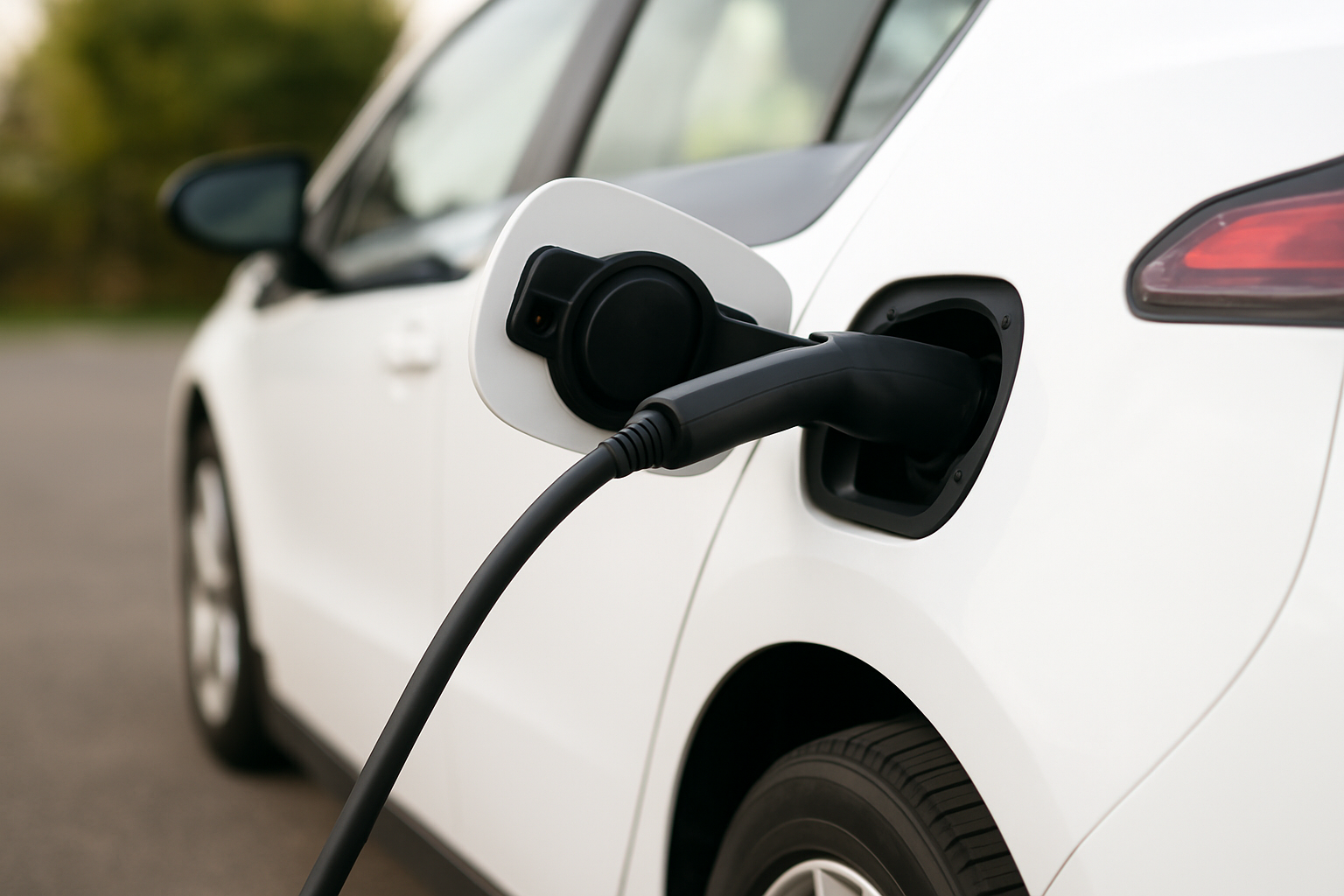
Federal tax credits for many electric vehicles were scaled back last month, as new rules under the U.S. Inflation Reduction Act tightened eligibility based on wherevehicles and theirbatteries are made.
Despite the loss of incentives for several popular models, the EV Advocates of Ventura County—a volunteer group dedicated to promoting electric transportation— forged ahead with events celebrating National Drive Electric Month, reminding residents that environmental progress can outlast government incentives.
At the Port of Hueneme Banana Festival on Sept. 27, the group showcased nine electric vehicles and an electric school bus from the Oxnard Union High School District. Throughout the county, school districts are steadily transitioning to clean-emission electric buses.
A week later, on Oct. 5, the group gathered 66 vehicles on the lawn at Ventura Harbor, drawing several hundred visitors. EV owners displayed 46 different models, ranging from a first-generation Nissan Leaf to a 2026 Hyundai Ioniq 9, and from electric motorcycles to a brand-new VW ID. Buzz microbus. Two of the most talked-about exhibits were a 1969Subaru minibus converted to electric power and a 2025 Dodge EV Daytona Charger.
Thanks to support from the Ventura County Regional Energy Alliance, the Ventura Unified School District brought one of its electric buses to the event, with the driver on hand to answer questions.
Also on display were three Tesla Cybertrucks, including one owned by the event organizer and EV Advocates field representative, Kent Bullard.
Unfazed by the end of federal subsidies, Bullard said he believes that rising gas prices, a growing public charging network and an ever-wider variety of EV models will sustain strong demand.
When asked whether large, powerful EVs might undermine the environmental message of efficiency and conservation, Bullard offered a measured response.
“If people were to buy a Rivian R1S or Cybertruck instead of a gas-burning Suburban or Expedition, that’s a step forward,” he said.
Smaller, lighter vehicles remain the greener option for most drivers, but Bullard’s broaderpoint is clear: electric vehicle technology now spans nearly every transportation need, fromcompact commuters to long-range haulers.
To demonstrate that EVs can truly “go the distance,” Bullard and another advocate towedtheir travel trailers to the Ventura Harbor event. Bullard’s 4,000-mile summer road trip with his trailer underscored the increasing practicality of long-distance electric travel.
The local push for EV adoption continues on multiple fronts.
In Camarillo, Tesla has been building two new Supercharger sites. The location on the westside of the outlet mall is already live, featuring 20, 325 kW chargers. A second station with24 chargers at Camarillo Plaza is awaiting utility connection. Additionally, two dual-headLevel 2 chargers are being installed near the Camarillo Family YMCA, and a 30-unit projectat CSU Channel Islands is delayed pending infrastructure upgrades.
In Thousand Oaks, Cal State Northridge has installed 46 Level 2 chargers at Montclef andOlsen roads. A new site at Cho Cho San, 400 E. Thousand Oaks Blvd., will include two DCfast chargers and three Level 2 units.
Federal subsidies may be winding down, but Ventura County’s growing charging infrastructure and grassroots advocacy efforts continue to drive electric momentum—proving that local action, not just national policy, powers long-term environmental progress.
Where the market stands
The U.S. sold about 1.3 million electric vehicles in 2024, a record-high number. Still, EVsremain less than 10% of new vehicle registrations.
Through the first half of 2025, cumulative electric vehicle sales in the U.S. totaled just over 568,000 units, up roughly 1.6 % from the same period a year earlier. The end of the federal subsidies could slow growth in the fourth quarter compared to earlier ones, but if sales accelerate in Q4, the current year could beat 2024.
The EV market in 2025 is not uniformly strong—growth is concentrated among certain automakers and models. Kia’s electric vehicle sales dropped 54 % in the first half of 2025vs. 2024. Mercedes’ EV sales also came under pressure. Tesla remains the largest single seller.
John Loesing contributed to this article.